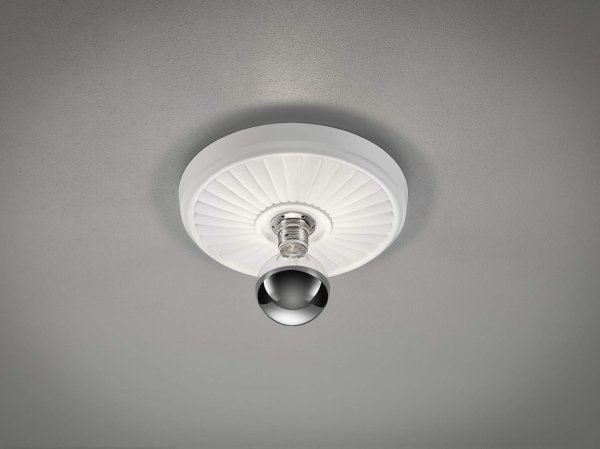
Ceiling Lights

Ceiling Lights for Every Room

Explore our range of ceiling lights for kitchens, bathrooms, bedrooms, and living rooms. We offer a variety of ceiling light fixtures including flush mount, semi-flush, and surface-mounted styles to suit any ceiling height or layout. Our collection includes options with E14, E27, G9, and integrated LED fittings, available in both dimmable and non-dimmable models.

Choose from modern ceiling lighting fixtures with clean finishes, such as white and chrome, and find IP20-rated options for dry rooms or IP44-rated lights for bathrooms and kitchens. Whether you're replacing a single ceiling light or planning full home lighting, you'll find reliable, energy-efficient solutions, including LED ceiling lights, ceiling lighting for low ceilings, and multi-bulb ceiling LED lights that offer excellent brightness and style.

Frequently Asked Questions

How do I choose the right ceiling light for a room?

Choose a ceiling light based on room function, ceiling height, required brightness in lumens, colour temperature (CCT), and IP rating; typical targets are 1,500-10,000 lm and 2700K-4000K depending on use. Start by defining the room's primary tasks: kitchens usually need 5,000-10,000 lm total and 3000K-4000K, living rooms 1,500-3,000 lm at 2700K-3000K, and bedrooms 2,000-4,000 lm at 2700K-3000K. Also match fixture type to ceiling height: use flush mounts for ceilings under 2.4 m (8 ft) and semi-flush or decorative fixtures for higher ceilings. Finally check IP rating for bathrooms and outdoor areas and confirm dimming compatibility with your dimmer model.

  • Room function - choose brightness and CCT by task: kitchens 5,000-10,000 lm and 3000K-4000K, living rooms 1,500-3,000 lm and 2700K-3000K, bedrooms 2,000-4,000 lm.
  • Ceiling height - use flush or low-profile fixtures for ceilings under 2.4 m (8 ft); semi-flush or statement fixtures suit ceilings above 2.6 m (8.5 ft) and allow 5-30 cm drop.
  • Brightness (lumens) - prioritise lumens over wattage: aim for room totals listed above; a single fixture typically supplies 800-3,000 lm depending on room size.
  • IP rating - check IP (Ingress Protection) for bathrooms/outdoors: IP44 for splash zones, IP65+ for direct water exposure.
  • Style & finish - match finishes like chrome, white, or antique brass to existing decor; size and proportion should align with room dimensions.

What does an IP rating mean for bathroom ceiling lights?

The IP rating (Ingress Protection) indicates protection against solids and liquids using two digits: the first 0-6 rates dust protection, the second 0-9 rates water protection; for bathrooms aim for IP44 for splashing zones and IP65/IP67 for areas exposed to jets or direct water. Always check manufacturer instructions and local bathroom zone guidance before installation. In practice, IP20 is suitable only for dry rooms like bedrooms, while IP44 or higher is required for sinks and general bathroom areas; shower enclosures often need IP65 or higher for safe use and longevity.

  • IP20 - suitable only for dry interior rooms such as bedrooms or living rooms; offers no significant protection against water and is not safe for bathroom zones.
  • IP44 - protects against splashing water and is suitable for bathroom zones where splashes may occur, such as above sinks and general bathroom areas.
  • IP54 or higher - provides protection against limited dust ingress and stronger water exposure; choose IP65 or IP67 for fixtures inside shower enclosures or for outdoor exposure.

What is an integrated LED in ceiling lights?

An integrated LED is a light source built directly into the fixture instead of using a replaceable bulb; integrated units typically have rated lifespans of 25,000-50,000 hours and use about 60-80% less energy than equivalent incandescent sources. This design enables slimmer profiles, consistent colour rendering, and often better thermal management. When choosing integrated-LED fixtures, verify the rated life, lumen output, CCT options, and warranty (commonly 2-5 years) because if the LED fails you usually replace the whole fixture rather than a single bulb.

  • Advantages - integrated LEDs offer 25,000-50,000 hours life, around 60-80% lower energy use versus incandescent, and allow compact, slim fixture designs with consistent light output.
  • Consideration - if the integrated LED fails the entire fixture is usually replaced; check manufacturer warranty (commonly 2-5 years) and rated LED life (25,000-50,000 h) before buying.

What is CCT (Correlated Colour Temperature) in lighting?

CCT (Correlated Colour Temperature) measures the perceived 'warmth' or 'coolness' of light in Kelvin (K); common ranges are 2700K-3000K for warm white, 3500K-4000K for neutral/cool white, and 5000K+ for daylight. Choose 2700K-3000K for relaxing spaces like living rooms and bedrooms, 3500K-4000K for kitchens and bathrooms where clearer, task-oriented light is helpful, and 5000K+ for very bright task areas or commercial settings. Check fixtures labeled '3CCT' or 'tunable CCT' if you want adjustable colour temperature within one fitting.

  • Warm white (≈2700K-3000K) - creates a cozy, inviting atmosphere ideal for living rooms and bedrooms; use this range to enhance relaxation and warm tones in decor.
  • Neutral/cool white (≈3500K-4000K) - provides clearer, more focused light suited to kitchens, bathrooms, and work areas where accurate colour and visibility are important.
  • Daylight (≥5000K) - gives very bright, crisp light for detailed tasks or commercial settings and can feel clinical in residential living spaces.
  • Tunable/3CCT fixtures - models labeled 3CCT typically offer three preset temperatures (for example 2700K, 3500K, 4000K) allowing you to switch mood or task lighting without changing the fixture.

What's the difference between flush mount and semi-flush ceiling lights?

The key difference is how close the fixture sits to the ceiling: flush mount fixtures sit directly against the ceiling while semi-flush fixtures hang a short distance below (typically 5-30 cm). Choose flush mounts for ceilings under 2.4 m (8 ft) or narrow hallways where head clearance matters, and choose semi-flush mounts for rooms with standard or higher ceilings where the fixture can add decorative presence. Semi-flush fixtures often provide more diffusion and visual interest, while flush mounts are low-profile and practical for compact spaces.

How do I select the correct size ceiling light for my space?

Select fixture size by comparing room dimensions to recommended fixture diameter and ensuring appropriate clearance: add the room length and width in feet to get the suggested diameter in inches (e.g., a 10 ft × 12 ft room → 22-inch diameter). Ensure at least 84 inches (213 cm) of clearance from floor to bottom of the fixture in walkways; for dining tables use a fixture about one-half to two-thirds the table width and hang it 76-96 cm (30-38 in) above the tabletop. For metric users, sum room length and width in meters (convert to feet) or follow the proportional guidelines above.

Flush, semi-flush, or pendant? Choosing the right ceiling light for your room

Selecting the right fixture begins with understanding how the room's purpose and ceiling height influence the mounting type. For spaces with lower ceilings, hallways, or utility rooms, flush ceiling lights are the ideal choice as they sit close to the surface, maximizing vertical space. These low-profile designs are also essential for bathrooms, provided they carry the correct IP rating. Conversely, if you are furnishing a living room or dining area with ample height, semi-flush lights or decorative pendants make excellent statement fixtures. Whether you prefer the sparkle of crystal, the classic appeal of Tiffany styles, or modern ribbon and orbiform designs, matching the finish to your décor creates a cohesive look.

When installing your lighting, a good rule of thumb is to ensure at least ~84 inches (213 cm) of clearance from the floor to the bottom of the fixture to keep walkways unobstructed. If you do not see a specific "Type" filter, you can often determine the mounting style by checking for keywords like "Flush", "Semi-Flush", "Pendant", or "Drum" directly in the product titles.

Bulb guide: E27, G9, or integrated LED ceiling lights?

The type of lamp holder in your fixture affects maintenance and lighting quality. You will generally choose between fixtures with replaceable bulbs (using sockets like E27, E14, or G9) and those with Integrated LED technology. If you prefer the ability to easily swap out bulbs or want to match existing bulb types you have at home, look for standard holders like E27 or E14. This option offers easier maintenance and the flexibility to change colour temperatures later.

On the other hand, Integrated LED ceiling lights are popular for their slim profiles and high energy efficiency. While they offer a modern aesthetic and potential energy savings, note that the light source is usually not user-replaceable. When choosing between the two, consider the trade-off: Integrated LEDs offer sleek design and efficiency, while replaceable-bulb fixtures offer better serviceability and longevity of the fixture itself. Always check the product specs to confirm if a fixture is "Integrated LED" or requires a specific bulb type.

Technical checklist: IP ratings, lumens, and dimmability

Use this technical checklist to ensure safety and performance when reviewing product specifications:

  • IP Rating: For dry interior rooms like bedrooms or living areas, IP20 is the standard. However, for bathroom zones or areas near water, you must select IP44 or higher. Always verify the specific zone guidance and manufacturer installation notes.
  • Colour Temperature (CCT): Choose the light colour based on the room's function. Warmer tones (2700-3000K) are best for relaxing spaces, while neutral tones (3000-4000K) are better for kitchens and task areas.
  • Brightness: Rely on lumens rather than watts to estimate brightness. If lumen values are not explicitly listed, check if the item is an Integrated LED and review the wattage to estimate the output.
  • Dimmability: Do not assume all LED ceiling lights are dimmable. Check the"Dimmable" filter or look for a "Yes" flag in the specifications. If you plan to use a dimmer, ensure the fixture is compatible with your specific switch type.

Narrow down your choices using the filters for Room, Lamp Holder, IP Rating, and Dimmability. Review individual product pages for detailed specifications, including lumens and Colour Temperature, to ensure the light meets your needs.