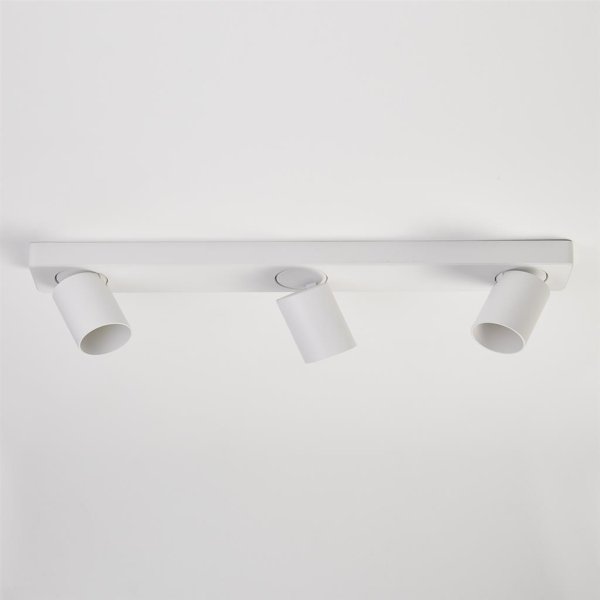
Spotlights

Ceiling Spotlights and Downlights for Every Room

Explore our range of ceiling spotlights suitable for living rooms, bedrooms, kitchens, and bathrooms. We offer a wide selection of spotlight ceiling lights in different styles, including fixed and adjustable fittings. Our products include GU10, G9, and integrated LED options, with many dimmable models available. Choose from IP20 spotlights for general indoor use or IP44 and IP65 rated spotlights for bathrooms and other moisture-prone areas. Whether you need spotlights for the house, room spotlights, or ceiling downlights, you’ll find reliable and easy-to-install options to suit your space.

Frequently Asked Questions

What should I consider when buying bathroom spotlights?

Consider specific values: IP rating (Ingress Protection) - IP44 for general bathroom zones and IP65 for shower enclosures; lumen output 300–700 lm per spotlight; color temperature 2700–4000 K; CRI ≥80; beam angle 24–60°; and corrosion-resistant finishes such as stainless steel or chrome. Also check whether the fixture is dimmable, compatible with your wiring (mains GU10 vs low-voltage), if a fire-rated version (EI30/EI60) is required, and the expected LED lifetime (25,000–50,000 hours). For retrofits, confirm ceiling void depth and ease of bulb replacement.

IP rating – choose IP44 for general bathroom zones and IP65 for fittings inside a shower or where direct water jets may occur. Lamp output – aim for 300–700 lm per downlight depending on spacing; use higher lumens for task areas. Finish – select stainless steel or chrome finishes (or powder-coated aluminium) to resist humidity and corrosion.

What does an IP rating mean for spotlights?

An IP rating (Ingress Protection) specifies protection levels against solids and liquids; common spotlight ratings are IP20, IP44, and IP65, where IP44 resists splashing water and IP65 resists water jets and strong ingress. The first digit (0–6) rates protection against dust and solids, while the second digit (0–9K) rates protection against liquids. For bathrooms, choose at least IP44 for general zones and IP65 for shower enclosures or outdoor-facing downlights. Always match the IP rating to the fixture location to meet safety requirements and local electrical codes.

First digit (solids) – 0–6 scale; 6 means dust-tight protection. Second digit (liquids) – 0–9K scale; 4 resists splashing, 5 resists jets, 6+ withstands stronger water jets. Examples – IP20 for dry rooms, IP44 for general bathrooms, IP65 for shower enclosures or outdoor use.

What's the difference between GU10 and G9 lamp holders?

GU10 and G9 differ in base type, typical voltages, and use cases: GU10 uses a twist-and-lock bayonet base for mains voltage (230–240 V) directional spotlights, while G9 uses a 2.5 mm two-pin capsule base common in decorative or accent fittings. GU10 bulbs are available as user-replaceable LED versions (typically 4–10 W replacing 35–50 W halogen), offering directional beams and easy upgrades. G9 capsules (2–6 W LED replacing 20–40 W halogen) suit compact fixtures but check heat ratings and whether the fitting requires a glass cover or ceramic holder.

GU10 – twist-and-lock mains bayonet base for 230–240 V spotlights; LED replacements typically 4–10 W (300–700 lm) replacing 35–50 W halogen. G9 – 2.5 mm two-pin capsule base used in decorative fittings; LED versions usually 2–6 W replacing 20–40 W halogen (check heat limits).

Are integrated LED spotlights better than GU10 spotlight fittings?

Neither integrated LED nor GU10 fittings are universally better; choose based on priorities such as serviceability, energy use, and upfront cost: integrated modules typically consume 6–12 W with lifetimes of 25,000–50,000 hours but require replacing the whole fixture if the LED fails, while GU10 bulbs are replaceable (4–10 W LED) allowing easy upgrades to different color temperatures or lumen outputs. Consider installation costs, dimmer compatibility, and whether you prefer the slim profile of integrated units or the future flexibility of GU10 bulbs.

Integrated LED – built-in LED module, typically 6–12 W and 25,000–50,000 hours lifetime; sleek low-profile design but whole fixture replacement if module fails. GU10 – user-replaceable bulbs, typically 4–10 W LED; allows color-temperature or lumen upgrades and simpler maintenance.

What does 'fire rated' mean for downlights and when is it required?

Fire-rated downlights are designed to preserve a ceiling's fire resistance for a specified period, commonly 30 or 60 minutes (marked EI30 or EI60), preventing fire and smoke spreading through ceiling penetrations. They include intumescent seals or insulating collars that expand under heat to seal gaps. Fire-rated fittings are often required by building regulations in multi-storey dwellings or where the ceiling forms a compartmentation barrier; using non-rated fixtures can compromise the building's fire strategy. Always confirm local regulations and have installation checked by a qualified electrician or building inspector.

How they work – fire-rated downlights use intumescent material or collars that expand at high temperatures to seal the ceiling hole; typical ratings are EI30 (30 minutes) or EI60 (60 minutes). When required – commonly in multi-storey buildings or where the ceiling is a fire barrier; confirm local codes and use certified products.

Which is better: recessed or surface-mounted spotlights for my ceiling?

Recessed spotlights give a flush, minimalist look but usually require a ceiling void of at least 75–100 mm and can cost 20–40% more to install due to cut-outs and wiring; surface-mounted spotlights are cheaper to fit, require no void, and are ideal for concrete ceilings or quick retrofits. Recessed fixtures may need fire-rated versions in certain buildings and often require insulated-rated or IC-rated products if installed near insulation. Choose based on ceiling depth, aesthetic preference, installation budget, and regulatory requirements.

Recessed spotlights – need 75–100 mm minimum ceiling void; higher installation cost (20–40% more) and may require fire-rated or IC-rated units; ideal for seamless, modern finishes. Surface-mounted – no void needed, simpler retrofit, typically lower labour cost and quicker installation.

Recommendation – choose recessed for a seamless modern look if you have the required 75–100 mm void and budget for slightly higher installation costs; choose surface-mounted for concrete ceilings, limited depth, or lower-cost retrofits.

Are dimmable spotlights worth the extra cost?

Yes, dimmable spotlights are usually worth the extra cost: they can reduce energy use by up to 30% at lower light levels, allow light output control from about 10–100%, and enhance ambience and task lighting. Dimming can also reduce perceived glare and potentially extend LED lifespan when used at lower drives. To avoid flicker, ensure both the fixture and the LED bulb are rated dimmable and pair them with an LED-compatible dimmer; check compatibility lists and total circuit load before installation.

GU10, G9, or integrated LED - Which spotlight type is best?

Selecting the correct lamp type is critical for both aesthetics and long-term maintenance. Understanding the trade-offs between available options helps you make an informed decision:

GU10 Spotlights: The top choice for flexibility. As a retrofit option, they allow you to easily replace bulbs or change the color temperature (CCT) without replacing the fixture-ideal for kitchens and living rooms.

Integrated LED: Perfect for a sleek, low-profile look. These units are often slimmer and highly efficient, though the light source is fixed. Always check the driver lifetime for long-term value.

G9 Spotlights: Best suited for smaller, decorative fixtures or wall lights where a compact light source is necessary.

Always check if the specific product is labeled as dimmable. While many GU10 LEDs are compatible with dimmers, integrated units must be specifically rated for it.

Bathroom spotlights & IP ratings: safety in wet areas

When installing lighting in bathrooms or outdoor eaves, the Ingress Protection (IP) rating is your primary safety guide. This rating indicates how well the fixture resists moisture and dust. Match the rating to the specific bathroom zone:

  • IP20: Suitable for dry areas like living rooms and bedrooms where there is no risk of water contact.
  • IP44: The minimum requirement for general bathroom zones. These fixtures handle splashes and are perfect for mirror and ceiling lighting outside direct water streams.
  • IP65: Required for areas exposed to direct water jets, such as inside shower enclosures or outdoor-facing locations.

Always verify the specific zone rating in the product details and consult a qualified electrician to ensure compliance with local building regulations.

How many spotlights do I need? layout, lumens & mounting

Planning your layout requires some calculation to ensure adequate brightness. A common approach is to determine the total lumens needed for the room size and divide that by the output of a single spotlight (typically 300-500 lm for a standard GU10 LED). Once you have an estimate, consider how the mounting type affects installation:

  • Recessed Spotlights: Offer a flush, clean finish but require sufficient ceiling depth and fire-rating checks.
  • Surface-Mounted: Ideal for concrete ceilings or retrofits where cutting holes isn't possible.
  • Track Lighting: Provides the ultimate adjustability, allowing you to reposition heads for task or accent lighting.

Keep in mind that the beam angle often affects perceived brightness more than the lumen count; narrow beams are great for highlighting artwork but require more fixtures to create even ambient light compared to wider angles.

Ready to upgrade your lighting? Use the filters above to sort by Lamp Holder, IP Rating, Room, and Brand. Be sure to review individual product pages for specific technical data like lumen output and dimmer compatibility. For complex installations or fire-safety requirements, consult a qualified electrician.