

 Call us on
021 4975201


QtyAdd to Cart
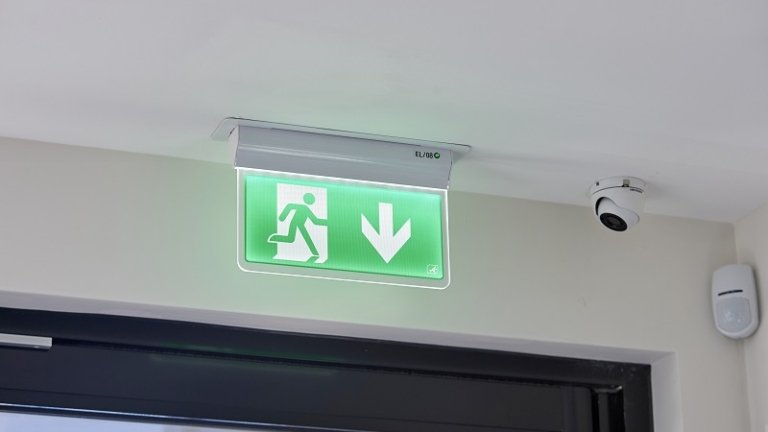
When normal power fails, reliable LED emergency lights and signs are critical safety fittings designed to guide escape routes and maintain visibility. Whether you are marking exit routes in offices or supporting safe evacuations in industrial premises, compliance is essential. Selecting the right fitting for your specific building layout ensures a safe and efficient evacuation. Our commercial emergency lighting systems cover a wide spectrum of product forms - including clear exit signs, durable bulkheads, discreet downlights, powerful twin spots, and compact pods from dependable brands like Ansell Lighting and ESPN - ensuring you have the exact tool for the job.
Select a maintained emergency light if the fitting must remain on during normal operation and still provide at least three hours of backup during a power cut. Choose a non-maintained emergency light if you only need illumination when the mains power fails. These are common in offices, corridors, and workspaces with good ambient lighting. Maintained fittings are often used in cinemas, hotels, and dimly lit halls, while non-maintained bulkheads are a simpler, lower-cost option for everyday areas.
Outdoor emergency lighting should have a minimum IP65 rating to protect against dust and water jets. An IP66 rating is preferable for harsher weather conditions or industrial environments. For exposed exit routes, external walls, and car parks, IP65 is usually sufficient. In dry indoor areas such as offices and corridors, an IP20 rating is standard and acceptable as there is no risk of moisture exposure.
Yes, lithium (LiFePO4) emergency lights are generally the better choice. They can last between five and ten years, require less maintenance, and offer more stable performance than lead-acid batteries. Although they often have a higher initial cost, their lower replacement frequency can reduce the total cost of ownership over time. Lead-acid models are still a viable option for budget-conscious projects, but they typically require more frequent battery replacement and testing. At MCK Electrical, we offer a wide range of both lithium and lead-acid options to suit any project.
'All legends included' means the exit sign is supplied with multiple directional arrow inserts, typically for Up, Down, Left, and Right. This simplifies installation, as the same fitting can be adapted on-site to suit various escape route layouts. It is a practical feature for contractors and facilities teams, particularly for 3-in-1 exit signs and slimline exit boxes.
A self-test emergency light automatically performs functional and duration tests at regular intervals, typically every 28 days for short checks and every 12 months for a full discharge test. It uses an internal controller to check the battery and LED light source, indicating any faults via a status LED. This feature reduces manual inspection time, supports compliance with BS 5266-1, and helps facilities teams maintain accurate records with less administrative effort. If you need help choosing the right self-test products, our team is always available to provide expert advice.
A corridor lens is better suited for narrow escape routes as it shapes the light beam into a long, rectangular pattern, effectively illuminating a width of approximately one to two metres. An open lens is more suitable for larger, open-plan areas because it provides a wider, circular light distribution. Some emergency downlights feature interchangeable optics, allowing a single fitting to be adapted for either corridor or open-area layouts during installation.
Emergency twinspot lights should be installed in large spaces requiring strong, directional coverage, such as warehouses, factories, loading bays, and car parks. Twinspots typically feature two adjustable heads with an output equivalent to approximately 2 x 9W, making them more powerful than standard bulkheads for illuminating wide areas. For outdoor or industrial locations, it is essential to choose a model with a minimum IP65 rating to ensure protection against dust and rain.
Matching the fitting to the application in your building is a crucial first step. Rather than treating wattage as the main performance indicator, use your building's layout to decide the product type first, then narrow your options by mounting style and IP rating to ensure a fully compliant installation.
Determining how your commercial emergency lighting systems operate is a vital decision. Always define the building's daily use before making your choice to ensure seamless integration with everyday activities and minimise future maintenance burdens.
Our assortment also includes switchable emergency units capable of both maintained and non-maintained operation, giving installers maximum flexibility on-site.
Matching the Ingress Protection (IP) rating to the environment is essential to ensure long-term reliability and safety. A common error is to ignore moisture levels in damp locations or falsely assume that standard IP20 products are suitable for all environments.
Use IP20 exclusively for dry indoor areas, such as standard emergency lighting for offices. For sheltered damp zones, step up to IP44. If you need industrial emergency lighting or are outfitting a car park, IP65 emergency lighting is essential to withstand outdoor or exposed areas. For the harshest environments requiring specific wash-down resistance, you will need IP66 outdoor emergency lighting. Expert tip: when in doubt about an exposed location, always choose a higher IP rating to guarantee durability.
Once you have established the product form and IP rating, refining your mounting style ensures a smooth installation. For retrofit projects, a surface exit box or surface-mounted fitting is often simpler and faster to install than a recessed alternative. For a cleaner architectural look, opt for recessed downlights, whereas hanging exit signs suit larger environments. Ensure your selection from the Ansell or ESP Dürer emergency ranges perfectly matches your layout.
Selecting the correct legend direction (Up, Down, Left, Right) is crucial for accurately mapping your escape route. If a sign must guide people from multiple directions, or if you hold stock and need flexibility, an all-legends variant provides every directional arrow required for a fully compliant setup.
Maintenance requirements should not be overlooked. Emergency lighting self-test functionality is a valuable feature that significantly reduces manual inspection effort across larger sites. Additionally, opting for lithium battery emergency lights delivers a longer life, lower maintenance, and highly stable performance in regular commercial use compared to traditional lead-acid options.
Use our category filters to buy emergency signs online by fitting type, IP rating, mounting style, and legend direction. From dry indoor downlights to rugged IP66 bulkheads and twin spots by Ansell Lighting and ESPN, we provide everything you need to achieve total compliance. Select your ideal LED emergency lights and signs today to ensure reliable, safety-focused escape-route guidance for your entire facility.


