Outdoor Lighting

Brighten Up Your Home with Premium Outdoor Lights

Explore our wide range of outdoor lights designed to enhance your home's exterior with style and safety. Whether you're looking for LED outdoor lights, garden lights, or porch and patio lighting, we have something for every taste and budget.
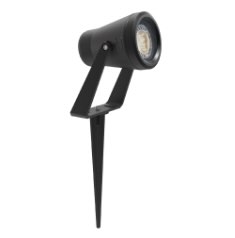
Shop from top brands like Fumagalli, Saxby, and Robus, with options including wall lights, bollard lights, spike lights, and more. Ideal for homes across Ireland, our selection of outdoor house lights combines durability with modern design to create the perfect ambience. Choose from various IP ratings, colour temperatures, and dimmable features to find the perfect outdoor lights for your house.

Shop by type:

Frequently Asked Questions

What should I consider when buying outdoor lighting?

Prioritize brightness, IP rating, power source, and material—aim for 50-1300+ lumens, IP44-IP68, and durable materials such as stainless steel (316 for marine) or UV-stable resin. Also decide whether you need mains power (110-240V) for consistent high output or solar for easier installation. Consider mounting location (wall, ground, bollard), desired beam angle, and fixture finish; these affect glare, coverage, and longevity. Finally, check warranty length (typically 2-5 years) and whether the lamp has replaceable LEDs or integrated modules, because replaceable parts extend service life and reduce long-term cost.

How do I choose the correct IP rating for outdoor lights?

Choose an IP rating based on exposure: IP44 for sheltered areas, IP65-IP66 for exposed locations subject to rain or sprinklers, and IP67-IP68 for in-ground or submerged fixtures. IP ratings indicate protection against solids and liquids, where the first digit (0-6) covers dust ingress and the second digit (0-9) covers water ingress. For driveway or facade lights exposed to wind-driven rain, IP65 is a safe minimum; for lights that sit flush with a pond or are temporarily submerged, select IP67 or IP68. Always verify manufacturer test standards and installation notes.

IP44 - suitable for sheltered porches or under eaves; protects against splashing water and provides basic dust resistance, ideal for covered walkways.

IP65 or IP66 - recommended for exposed garden or driveway lights facing direct rain or lawn sprinklers; IP65 resists jets of water, IP66 withstands more powerful water jets.

IP67 or IP68 - essential for in-ground, pool-adjacent, or permanently submerged fixtures; IP67 tolerates temporary immersion, IP68 handles continuous submersion per manufacturer depth ratings.

What is the best type of outdoor lighting for a garden pathway?

Bollard or dedicated pathway lights are the best choice for garden paths, providing 50-200 lumens per fixture and consistent downlighting to guide users safely. Position fixtures 1-3 meters apart depending on beam angle (narrow beams need closer spacing), and use warm to neutral CCT (2700K-3500K) for a welcoming look that doesn't overwhelm foliage. Spike lights can supplement for accents, but avoid high-mounted glare. Choose IP44-IP65 rated fixtures for typical outdoor exposure, and prefer replaceable LED modules or a 3-5 year warranty for long-term reliability.

What are the best outdoor lighting options for home security?

Motion-activated floodlights with 300-1300+ lumens and PIR sensors provide effective home security by deterring intruders and delivering immediate, bright illumination. Pair fixtures with 110-240V hardwiring or high-capacity LED drivers for reliable output, and choose 4000K or higher for a more alert, daylight-like appearance. Complement with timed or dusk-to-dawn fixtures on different circuits to avoid leaving all lights off. Ensure proper mounting height (1.8-3 m / 6-10 ft), aim angles to minimize false triggers, and check that motion sensor range and sensitivity match your property layout.

Motion sensors (PIR) - activate lights only on movement, saving energy and providing an alert; verify detection range and adjustable sensitivity settings.

High lumens - choose 300-1300+ lm for driveways and yards to ensure broad, powerful coverage and clear visibility.

Colour temperature - 4000K or higher appears brighter and aids surveillance cameras, but can be harsh for gardens; balance security and ambience.

Mounting - install at 6-10 feet (1.8-3 m) and angle to avoid false triggers from roads or heat sources.

What are the key differences between solar and wired outdoor lighting?

Solar lights provide zero running cost and easy installation, typically offering 3-8 hours runtime and 50-400 lumens depending on panel size and battery capacity; they are best for ambient or decorative use. Hardwired fixtures (110-240V) deliver consistent brightness, higher lumen outputs (300-1300+ lm), and reliable operation regardless of weather, making them better for security or task lighting. Installation complexity, maintenance, and lifespan differ: solar units may need battery replacement every 2-5 years, while hardwired LEDs often last 25,000-50,000 hours but require professional electrical installation.

What does CCT (Correlated Colour Temperature) mean for outdoor lights?

CCT (Correlated Colour Temperature) measures the colour appearance of light in Kelvin (K); common ranges are 2700K-3000K (warm), 3000K-4000K (neutral), and above 4000K (cool/daylight). CCT affects mood, perceived brightness, and how colours appear—warm tones (2700K-3000K) are cosy and flattering for seating areas, neutral (3000K-4000K) is versatile for general exterior lighting, and cool (>4000K) enhances visibility for security tasks but can wash out foliage. Some fixtures offer adjustable CCT (multi-CCT) to let you select 2700K-5000K as needed.

How important is the material (e.g., resin, stainless steel) for outdoor light durability?

Material is critical for outdoor-light longevity: choose UV-stable resin, marine-grade 316 stainless steel, or powder-coated aluminium to resist corrosion and UV degradation; expected service life varies from 5 to 15+ years depending on environment. In coastal or high-salt areas, 316 stainless or specialized coatings are recommended to avoid pitting. Budget plastics and PVC may be acceptable for short-term decorative use but typically last 2-5 years. Always check manufacturer corrosion ratings, IP rating, and warranty length (commonly 2-5 years) for exposed installations.

Resin (UV-stable) - low maintenance, rust-free, and durable in varied climates; ideal for long-term use when UV stability is specified.

Stainless steel - strong and durable; choose marine-grade 316 for coastal or salty environments to prevent corrosion.

Aluminium - lightweight and often powder-coated for weather resistance; check coating quality and expected lifetime (5-10 years).

PVC/plastic - cost-effective for decorative or temporary uses, with typical lifespans of 2-5 years; verify UV resistance and warranty.

Which outdoor lighting type is best? A guide to wall, pathway, and garden fixtures

Proper outdoor lighting ensures safety on pathways, security for driveways, and a welcoming atmosphere. Whether you need practical outdoor wall lighting or decorative garden accents, start by matching the fixture to the location. Our collection includes wall lanterns, bollards, spike lights, and festoon options. Use the filters to select the right IP rating (from IP44 to IP68), lamp holder (E27, GU10, or Integrated LED), and dimmable features.

To find the right fit, define your goal—security, wayfinding, or ambience—and filter by the specific subcategory:

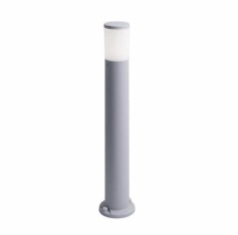
Pathway and Guidance: Use Bollard Lights & Pathway Lighting to clearly define edges and prevent trips.

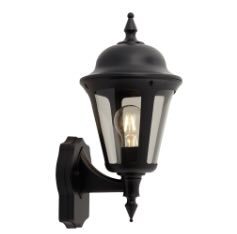
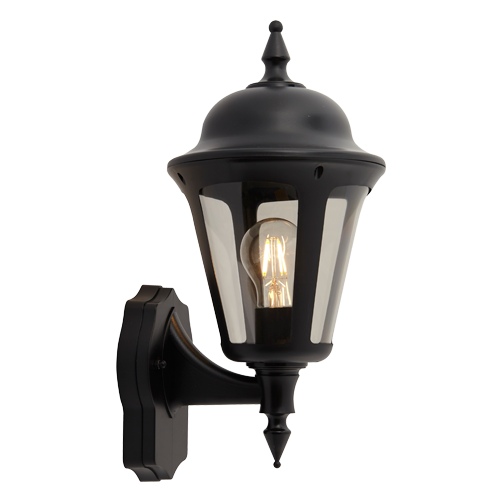
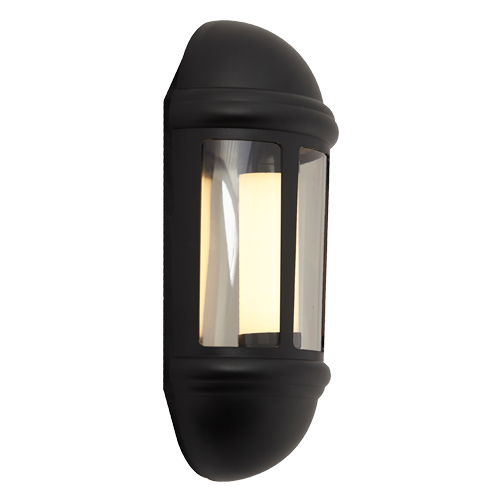
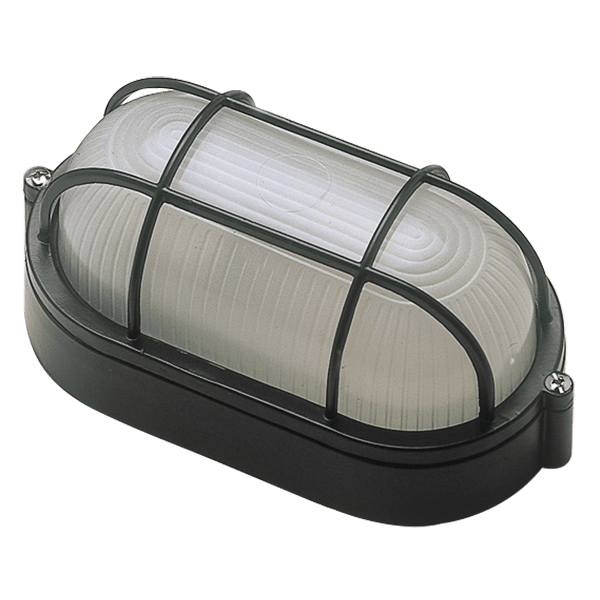
Entries and Porches: Outdoor Wall Lighting, such as lanterns or bulkheads, enhances security at entryways and illuminates door thresholds.

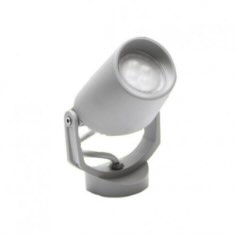
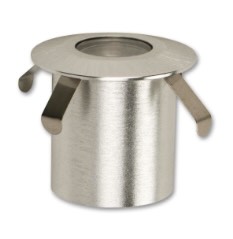
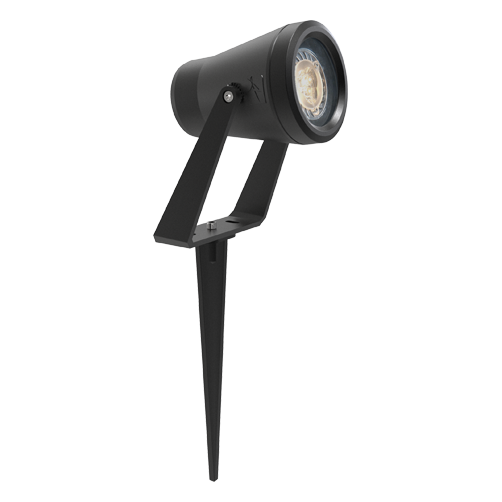
Accent and Features: Select Spike Lights to highlight garden features or In-Ground Lights and Brick Lights for discreet uplighting.

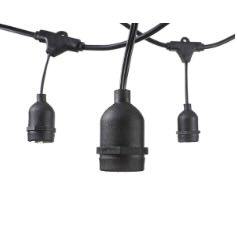
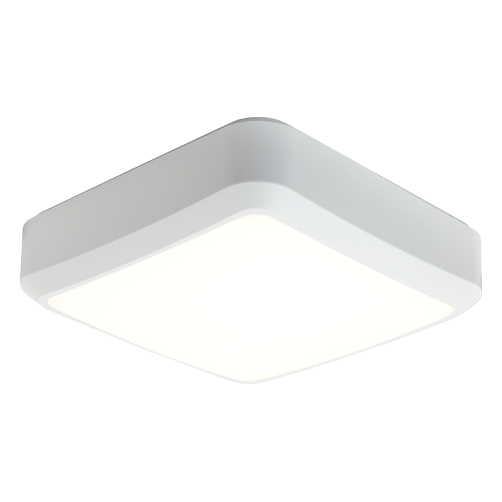
Ambience: Festoon Lights and Outdoor Ceiling Lights create a relaxed atmosphere on patios.

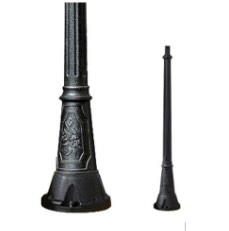
Larger Areas: Outdoor Post Lights provide broad visibility for large driveways and open gardens.

When to choose IP44, IP65, or IP67?

The IP rating (Ingress Protection) indicates resistance to water and dust. Matching the rating to the installation location is critical to prevent water damage.

Sheltered Areas: Choose IP44 for covered porches and wall lights protected from direct rain.

Exposed Locations: For garden walls or areas near sprinklers, select IP65 or IP66 to withstand direct water jets.

Ground and Water: In-Ground Lights or fixtures near pools require IP67 or IP68 for protection against submersion.

Check both the IP rating and IK rating (impact protection) if the light is installed in a high-traffic area.

How to choose the right brightness?

Focus on lumens rather than wattage to judge brightness. For pathways, 50-200 lumens is sufficient, while security lights should provide 300-1300+ lumens. Choose a colour temperature of 2700-3000K for a warm glow, or 3000-4000K for clear, functional visibility.

Select E27 or GU10 lamp holders if you prefer replaceable bulbs, or choose Integrated LED fixtures for a maintenance-free solution. For adjustable atmosphere, ensure the product is marked as dimmable and check compatibility with your switch.

Power sources and materials: Solar, mains, and sensors

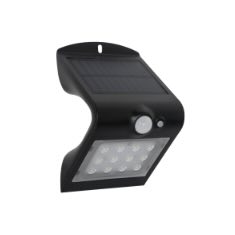
Solar lights offer easy, wire-free installation for sunny spots, while hardwired fixtures provide consistent power for security. For coastal areas, choose corrosion-resistant resin or stainless steel. To save energy and enhance security, look for outdoor lights with sensors (PIR). Filter by material and sensor type above to find your ideal match.