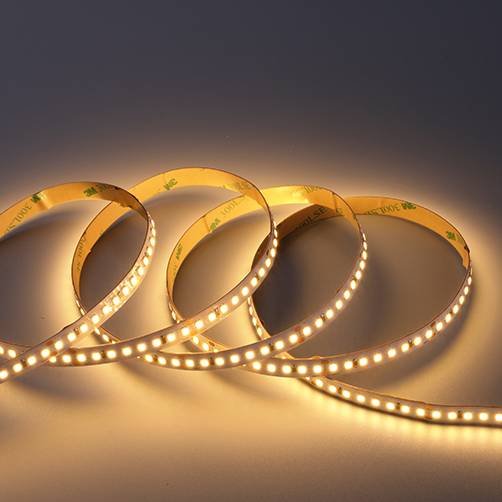
Finding the right LED strip means matching your application to the correct specifications. Whether you are a DIY enthusiast, professional installer, or retailer, our selection covers everything from under-cabinet task lighting to outdoor eave signage. Follow this simple process: start with your application, determine the required voltage, select the appropriate IP rating, choose your brightness (checking W/m and lumens), and finally, pick your ideal colour temperature (CCT or RGB).
Frequently Asked Questions
What colour temperature (CCT) should I choose for an LED strip light?
The ideal Correlated Colour Temperature (CCT) depends on the desired atmosphere and function of the space. For warm, ambient lighting in living rooms or bedrooms, choose a CCT of 2700K-3000K. For task lighting in kitchens or workspaces where clear visibility is important, a neutral white of 3000K-4000K is more suitable. For applications requiring daylight-like clarity, such as garages or display areas, 5000K-6500K is the best option. If you want the flexibility of colour-changing effects, RGB or RGBW strips are the perfect choice, with RGBW offering a dedicated white channel for a purer white light when needed.
Which IP rating do I need for an LED strip light outdoors or in a bathroom?
For most outdoor applications or bathroom zones where the strip may be exposed to splashes, an IP65 rating is required. If the strip light is likely to be temporarily submerged in water, you should choose an IP67-rated product. For installations involving continuous submersion, such as in ponds or pools, an IP68 rating is essential. The IP (Ingress Protection) rating indicates the level of protection against solids and liquids. For indoor, dry locations, a standard IP20 rating is sufficient. Always refer to the product's datasheet to confirm its specific IP test conditions and installation guidelines.
What is the difference between an RGB and an RGBW LED strip?
The primary difference is that an RGBW strip includes a dedicated white LED channel in addition to the red, green, and blue channels found in a standard RGB strip. While an RGB strip can create a white light by mixing its three colours, this often results in an off-white or inconsistent hue. The additional white channel in an RGBW strip produces a much truer, higher-quality white light. Therefore, if your project requires both dynamic colour effects and reliable, functional white illumination for tasks or ambient lighting, an RGBW strip is the superior choice.
What is a COB LED strip and when should I choose one?
A COB (Chip-on-Board) LED strip provides a continuous, uniform line of light without the visible dots or hotspots often seen with traditional SMD LED strips. This is achieved by mounting many small LED chips closely together under a single phosphor layer. This design makes COB strips ideal for applications where the light source is visible, such as in open-profile coving, under-cabinet lighting, or retail displays. Choose a COB strip whenever you need a seamless, dot-free appearance and reduced glare. For dynamic colour effects or addressable pixels, standard SMD strips are more suitable.
Should I choose a 12V or 24V LED strip light for my project?
For longer, continuous runs (typically over 5 metres), a 24V LED strip is the recommended choice as it suffers from less voltage drop, ensuring consistent brightness along its entire length. For shorter runs (under 5 metres) or in systems where a 12V power supply is already in place, a 12V strip is perfectly adequate. Voltage drop can cause the light to dim towards the end of a long strip, and using 24V mitigates this by halving the current for the same power output. Regardless of your choice, always ensure your power supply has 10-20% more capacity than the strip's total rated wattage.
Are LED strip lights dimmable?
Not all LED strip lights are dimmable. To dim an LED strip, you must use one that is explicitly labelled as 'dimmable' and pair it with a compatible dimming driver or controller. Common dimming methods include PWM, 0-10V, and TRIAC. It is crucial to check the product's datasheet to confirm its supported dimming protocol and ensure all components-the strip, controller, power supply, and any wall dimmer-are compatible. Using incompatible components can lead to flickering, a limited dimming range, or even damage to the system.
Can I cut an LED strip light to size?
Yes, most LED strip lights are designed to be cut to your desired length. The strips have designated cut points, usually marked with a scissor icon or copper pads, which are typically spaced every 25-100 mm. Cutting at these specific points ensures the electrical circuit remains intact. Cutting anywhere else will damage the section and cause it to fail. After cutting, you can rejoin sections using connector clips or by soldering. For IP-rated strips, remember to reseal the ends with waterproof end caps to maintain their protective rating.
Choosing the right LED strip colour temperature for your space
Matching your Colour Temperature (CCT) to the room's function is important for creating the right atmosphere. For a cosy, inviting ambience in bedrooms or kitchen mood lighting, a warm white LED strip (2200K-3000K) is ideal. If you need clarity for under-cabinet task lighting, a 3000K-4000K LED strip provides a crisp, neutral glow.
- Warm ambience: Choose 2700K to 3000K for relaxing environments.
- Task lighting: Opt for 3000K to 4000K for clear visibility.
- Colour effects: Select RGB or RGBW LED strip options for dynamic accent lighting. RGBW is highly recommended when you need both vibrant colours and high-quality, dedicated white light.
When colour rendering matters - such as in retail displays or food preparation areas - always check the CRI (Colour Rendering Index) on the manufacturer's datasheet to get accurate and vibrant colours.
Choosing a waterproof LED strip: IP20 vs IP65 explained
Selecting the correct Ingress Protection (IP) rating ensures your waterproof LED strip performs safely and lasts longer in its intended environment.
- IP20 LED strip: Best for dry, protected indoor installations, such as behind cabinetry or in cove lighting profiles.
- IP55 and IP65 LED strip: Ideal for splash zones, many bathroom areas, and protected outdoor runs like eave signage.
Note that true underwater submersion requires IP67 or IP68 ratings, which are not available in this current range. When reviewing datasheets for outdoor or damp use, check the enclosure type - whether it uses a silicone sleeve or solid encapsulation - as this directly impacts flexibility and heat dissipation.
Selecting a dimmable LED strip and avoiding flicker
While many options in our catalogue are dimmable, achieving smooth performance depends entirely on your dimming method (PWM, TRIAC, or 0-10V). To ensure your dimmable LED strip works smoothly, you must match your driver or LED strip controller to the specific dimmer type.
If you are dimming from a standard wall switch, always use a tested dimmer and driver pair to prevent frustrating flicker. For multi-channel setups like RGB or RGBW, choose the appropriate controllers. Always size your power supply unit (PSU) to handle the total wattage of the run plus a 10-20% margin of headroom. Checking product datasheets and tested dimmer lists is the best way to guarantee compatibility.
12V vs 24V LED strip: Choosing the best voltage and wattage for your project
The choice between a 12V LED strip and a 24V LED strip depends on your installation length. A 24V system is excellent for longer, continuous runs because it significantly reduces visible voltage drop, maintaining consistent brightness. Conversely, 12V options are perfect for shorter runs or for integrating into existing 12V systems.
Wattage per metre (W/m) serves as a helpful proxy for brightness. Our range includes various power levels, from subtle 3.3W/m and 4.8W/m strips for low-power accent lighting, up to powerful 9.6W/m and 15W/m options for demanding under-cabinet task lighting.
- Plan your run lengths carefully and use 24V to reduce visible voltage drop over distance.
- Consider power injection for very long installations.
- Always size your PSU with at least 10-20% headroom above your calculated load.
For exact lumen outputs, always consult the specific LED strip per metre details on the product datasheets.
Essential LED strip accessory: Power supply, controller, and connector
A successful installation relies heavily on choosing the correct accessories. A common mistake is purchasing an improperly sized LED strip power supply or the wrong LED strip controller. You must match your PSU to both the voltage and the total calculated wattage of your strip, including a 10-20% headroom.
When working with multi-channel lighting, ensure your controller supports the specific RGB or RGBW requirements. Choosing compatible LED strip connectors is important for secure, reliable joins. To reduce compatibility errors, check the product pages for linked accessory SKUs that match your chosen strip's voltage and channel count.
Filter our LED strip range by voltage, IP rating, colour temperature, and wattage to find your perfect match. View the datasheets linked on our product pages for precise specifications, and consult our FAQ or installation guides for helpful DIY tips. If you need assistance matching a power supply or controller to your chosen strip, contact our support team for expert advice.
Call us on
021 4975201